
Plant-forward collard greens recipes are filled with with grains, beans, and other vegetables (even a few fruits in the case of smoothies). Explore this collection of easy, tasty dishes that showcase how versatile and tasty collard greens can be.

Best known from the cuisine of the American South, the big, beautiful leaves of collard greens can make a cook feel a little intimidated. But don’t be — once you known how to work with them, collards may just become your favorite leafy green.
Collards were the biggest surprise for me as I developed my book, Wild About Greens. Until then, I’d most often seen recipes that called for boiling or braising the leaves for 20 minutes or more, which results in semi-mushy, olive-drab leaves.
A nutrient-packed cruciferous vegetable
Collard greens belong to the family of cruciferous vegetables, which includes cabbage, broccoli, and Brussels sprouts. There are lots of good reasons to add them to your repertoire.
Collards are a good source of vitamins A, C, and K, which is essential to bone strength and arich source of minerals, including calcium, potassium, magnesium, and iron. Here’s a detailed view of the nutrition profile of collard greens.

Tips for making the most of collard greens
- Availability: Collard greens are available year round, though they’re traditionally best when grown in the cool seasons — it’s said that makes their leaves sweeter. Look for collards with fresh, unblemished leaves and plump stalks.
- Storing collards in the refrigerator: If not using right away, wrap the entire bunch in paper towel, then a plastic produce bag. se within three days for optimal flavor (though they’ll keep a bit longer).
- Don’t overcook! Like other cruciferous vegetables, collards are unappealing when overcooked. I learned to appreciate them when I discovered the method of cutting the leaves into narrow ribbons. Followed by a quick stir-fry or braise (depending on the recipe), the mild, mellow flavor of collards really shines.
- A versatile vegetable: Collards are quite versatile, and are especially good in stews, and in dishes featuring grains and beans. With their mildly sweet flavor (they don’t have even a hint of bitterness like other greens do), they’re even fantastic in smoothies, in small amounts.
An Easy Way to Prep Collard Greens
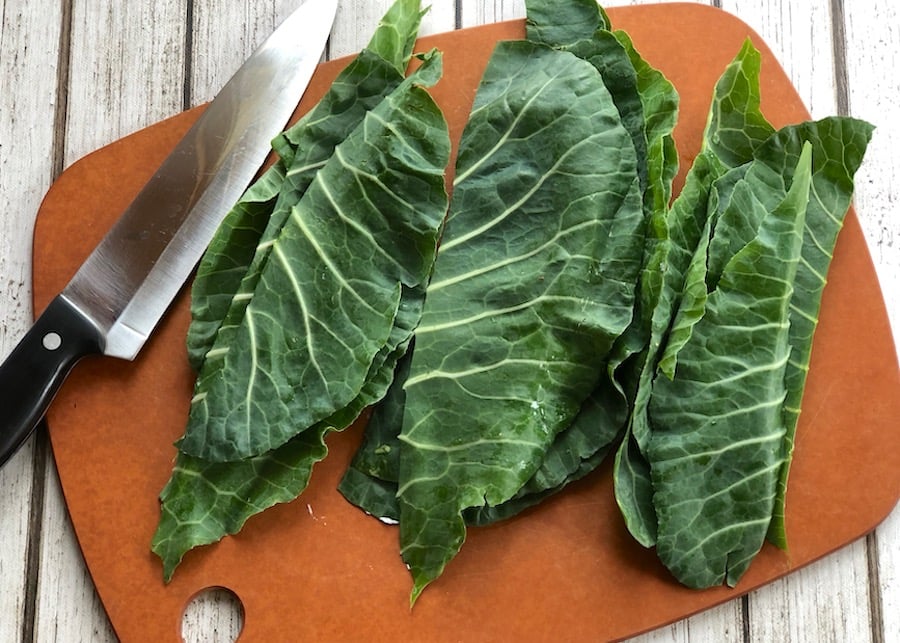
First, cut away the stems and stack them: Cut the leaves away from the stalks with kitchen shears or a sharp knife. Unlike other greens like kale or chard whose stalks can be thinly sliced and used, collard stalks are quite tough, so compost or discard them. Stack 5 or 6 like-sized leaves atop one another. Roll each stack up from one narrow end.
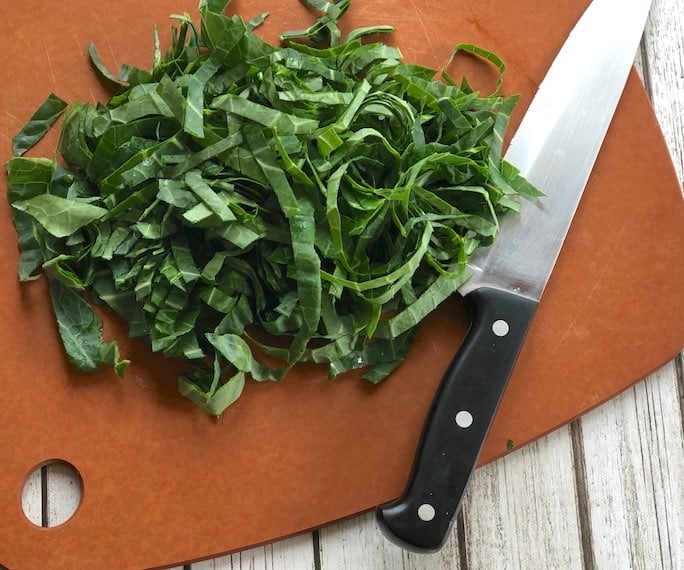
Roll them up and slice them: The newest, coolest way to cook collard greens is to roll up the leaves, slice them thinly. Then, when you stir-fry or braise them until just bright green and tender-crisp, they’ll retain their wonderful color and sweetness.

See more detail in this Guide to Collard Greens (and an easy way to prepare them). There you’ll find lots of reasons why collard greens are so good for you, too.
Next, you may want to explore The Most Basic, Best Way to Cook Leafy Greens: If you have a big batch of collards or other leafy greens, you’ll find the most basic to cook them — a simple garlicky sauté. While there are lots of delicious ways to prepare leafy greens, this one might just become your go-to. And there are so many tasty ways to vary it.
Soups & stews using collard greens

Vegan Cream of Leafy Greens Soup: When you have a surplus of greens that need to be used up, this vegan cream of leafy greens soup does the trick deliciously. If you love greens and have plenty of them, you’ll find this nourishing recipe useful as well as delicious.

Sweet Potato and Collard Greens Stew with Corn & Tomatoes: This lively stew of sweet potatoes and collard greens, embellished with fresh corn and tomatoes, is a perfect way to showcase late summer/early fall produce.
Collard greens side dishes

Collard Greens and Sweet Potatoes with Hoisin Sauce: There’s something so enticing about the sweet-and-pungent flavor of hoisin sauce enveloping the mild, earthy flavors of collard greens and sweet potatoes. Embellished with sweet red onion, this full-flavored side dish is welcome from early fall through late spring.

Stir-Fried Collard Greens and Cabbage: If you’ve never tried stir-fried collard greens and cabbage, you’re in for a treat! With their impressively large leaves, collard greens might not be your first choice of a vegetable to prep on a busy weeknight. But it’s easier than it may seem, and these leafy greens deserve a place in your rotation.
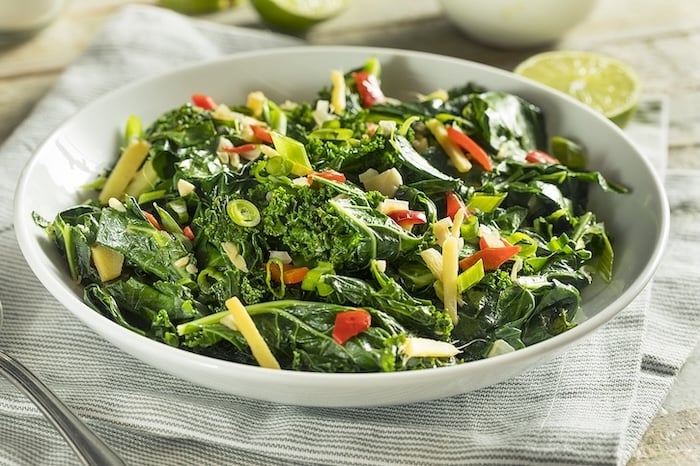
Sautéed Garlicky Greens with Bell Pepper: Here’s a basic preparation for chard, kale, collard greens, and escarole (or any combination). Sautéed garlicky greens with bell pepper is simple and tasty, a good way to use big batches of fresh greens from the farmer’s market.
Main dishes using collard greens

Rosemary Potatoes with Collard Greens and Vegan Sausage: This bountiful skillet dish features sweet and golden potatoes with collard greens. Flavored with rosemary and embellished with hearty vegan sausage, it makes a quick dinner entrée or a cool-weather brunch dish.

Spicy Collard Greens and Black-Eyed Peas with Fresh Tomatoes: Collard greens and black-eyed peas with fresh tomatoes make a most companionable trio, pulled together by a smoky heat provided by chile peppers and smoked paprika or barbecue seasoning.

Sweet and Smoky Beans and Greens: Beans and greens are a match made in vegan heaven. Pairing them in dishes like this simple skillet is cheap, nourishing, and with the right seasoning, so tasty and appealing. You can use collards or lacinato kale for this easy preparation.

Roasted Collard Greens with Brussels Sprouts and Polenta: Roasted collard greens and Brussels sprouts are embellished with polenta in a simple and hearty side dish. Prepared polenta adds a bit of comfort to the dish, and briny olives give it a nice flavor twist.

Hoppin’ John Risotto: Hannah Kaminsky presents her unique take on a traditional American New Year’s Day dish. Since one of the first few foods eaten on this first day of the year, it “must be just as full of symbolic luck as flavor. Greens are necessary no matter what the course, promising wealth in the form of monetary greens later. Peas and beans swell when cooked, suggesting prosperity. The combination of the two more directly represent health, because what could be more wholesome than greens and beans?”

Sesame Soba Noodles with Leafy Greens: An Asian-flavored dish of sesame soba noodles is laced through with collard greens (or lacinato kale) and flavored with a triple dose of sesame — tahini, seeds, and oil.

Seitan and Polenta with Fresh Greens: There’s something enticing about the synergy between seitan and polenta. With the addition of greens, the result is a great-looking, hearty dish. You’ll be using two different types greens — the hardier varieties (collard greens, kale, or chard) plus tender greens (spinach, arugula leaves, or bok choy).

Collard-Wrapped Yellow Rice and Black Bean Enchiladas: Large collard green leaves make amazing wrappers for grain and bean dishes, as shown in this photo by Ricki Heller. You can vary this by using other grains, such as quinoa or couscous.
Beverages made with collard greens
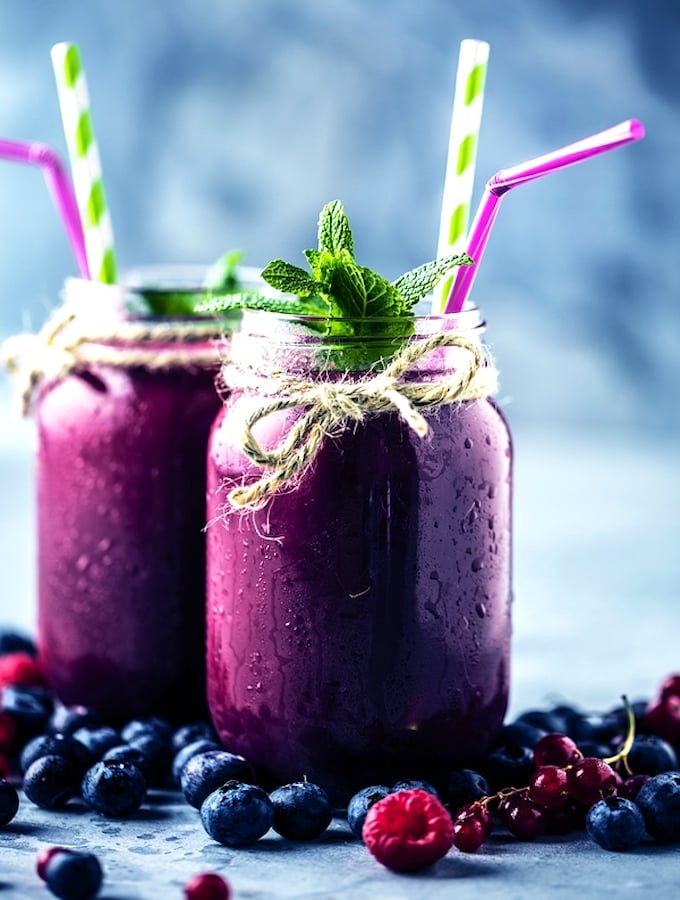
Blushing Berries and Greens Smoothie: Combining berries and greens in a smoothie results in a beautiful burgundy-purple beverage that’s as tasty is it is pretty. Use blueberries, raspberries or strawberries, or a combination of any two. Though either kale or collard greens work well in this, I especially like it with the latter, which I find a bit less biting when it’s raw.
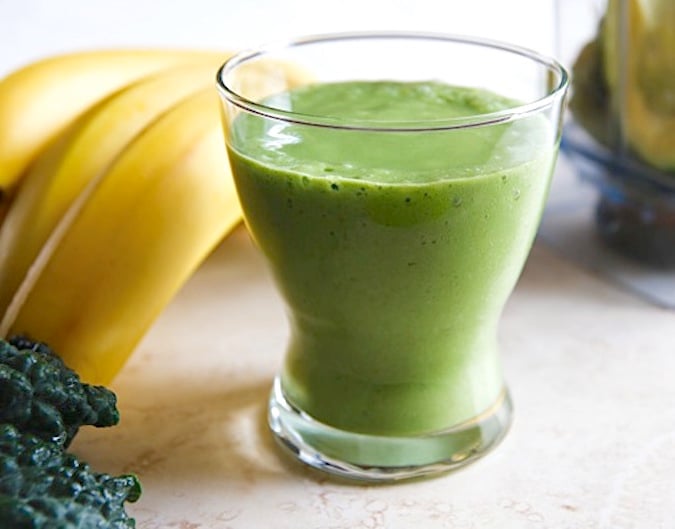
Green Smoothie with Banana And Avocado: Here’s a basic green smoothie recipe featuring collards, kale, or spinach, made filling and tasty with banana and avocado.
See more roundups & guides featuring good-for-you leafy greens
- Tasty, Easy Vegan Kale Recipes
- A Guide to Chard and a roundup of Chard recipes
- A Guide to Mustard Greens, with Tips, Ideas & Recipes

Wow! Thank you! I’m growing a lot of collard greens this season and I don’t want any of them to go to waste. These collard green recipes look and sound delicious! I’m looking forward to trying them all!