
Here’s a concise guide on how to use wasabi, the pungent Asian root. You’ll find tips on buying wasabi in various forms, plus links to delicious plant-based recipes.

Most of us in the west are mainly familiar with wasabi from Japanese eateries, where a small amount is served, along with pickled ginger and soy sauce, with sushi. It is fiery hot! But if you’re a fan of heat in your food, there are many other ways to use it.
What is wasabi and where did it come from?
Wasabi, which most of us in the West know as the fiery pale green stuff served with sushi, is sometimes known as Japanese horseradish. This is an apt description, since its flavor is reminiscent of the horseradish used in western cuisine — only hotter!
The word wasabi is translated from the Japanese as “mountain hollyhock,” and it’s from the ground, dried root of this plant that the hot spice is derived. It’s a member of the mustard family.
Its fresh, pungent taste has made it a traditional condiment to serve with sushi and other Japanese dishes.
Traditionally esteemed as an appetite stimulant, wasabi has also been said to aid digestion. In ancient Japan it was used for its powerful antiseptic qualities. Learn more about its nutrient facts.

HOW TO BUY WASABI
Wasabi is most often sold in powdered form, either in tins, jars, or packets. Individually wrapped packets, which contain 1 to 2 tablespoons of the potent powder, will keep indefinitely stored in a cool, dry place.
A little wasabi goes a long way, so buying it in small amounts is recommended. If you’ve ever seen wasabi paste served in a Japanese restaurant, you’ll note that about a rounded teaspoon is an average serving as a condiment.
The powder will keep for several months or longer once it has been opened. Though it doesn’t need refrigeration, you may want to store it in the fridge once opened.
Fresh wasabi root is challenging to grow in may climates, so it’s something you’ll run across in the supermarket. You can order the fresh root from online Asian superstores like Weee! and wasabi-focused business like Oregon Coast Wasabi and Real Wasabi.
Both of these stores carry other wasabi products as well. You’ll see that the fresh root is very, very, expensive. And the grating process isn’t simple. All of this explains why powdered wasabi, a far more economical product, is more common.
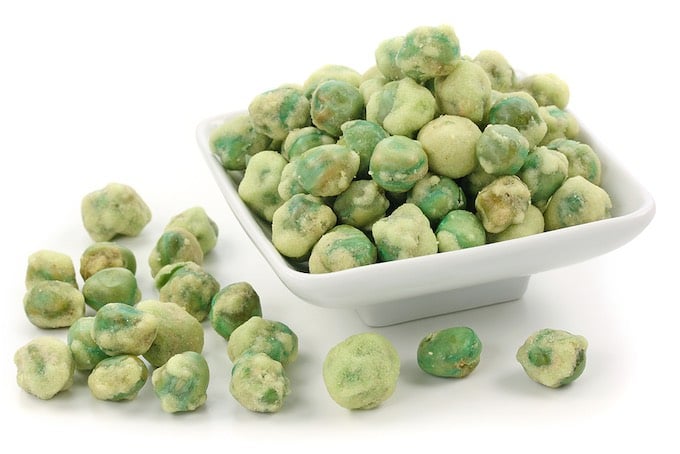
Wasabi peas are actually dried green peas coated with dried wasabi and other seasonings. They’re a crunchy, spicy snack to eat alone or to use as a topping for noodles, rice dishes, soups, and the like. Look for them in natural foods stores and Asian groceries. Learn more about wasabi peas.
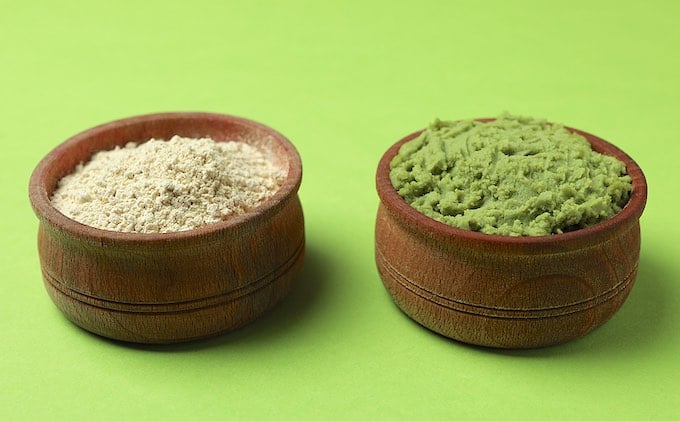
RECONSTITUING WASABI POWDER
Reconstitute wasabi by blending it with enough water to form a firm paste, with a consistency similar to miso or nut butter. Let the paste stand for 10 minutes or so before using to allow its flavor to develop.
A SIMPLE WASABI MAYONNAISE RECIPE
Try this dressing on potato salads, sea vegetable dishes, pan-sautéed tofu or tempeh. You can also use it as a dip with raw vegetables. This recipe yields a little more than 3/4 cup – a little goes a long way.
- 1 to 2 teaspoons wasabi powder (or more, if you’d like it really incendiary)
- 3/4 cup vegan mayonnaise
- Juice of 1/2 lemon
- 1/4 teaspoon garlic powder (optional)
1 Mix the wasabi powder with just enough water to form a paste. Allow the mixture to stand for 10 minutes.
2 Combine the wasabi paste with the remaining ingredients in a small serving bowl. Stir well to combine.
3 Leftovers keep well in a tightly lidded small container in the refrigerator for several days.
TASTY WAYS TO USE WASABI (WITH LINKS TO RECIPES)
Apart from its use as a condiment with sushi, wasabi is sometimes rolled into sushi as one of its elements.
- Blazing bowls: Wasabi adds big flavor to rice bowls like Vegan Sushi Bowls with Wasabi Mayo. Another delectable recipe: Crispy Coconut Poke Bowl with Wasabi Sauce.
- Spice up your tofu: Try Wasabi Tofu for a way to amp up the mild-flavored soy food.
- Wasabi Chickpeas are easy to make and even easier to eat.
- Roasted vegetables: Wasabi adds an unexpected flavor element to roasted vegetables. Try Wasabi-Roasted Asparagus and Wasabi Roasted Brussels Sprouts.
- Salad dressings: A little of its pungent flavor can also add a delightful bite to salad dressings like Clementine Dressing with Wasabi and Ginger.
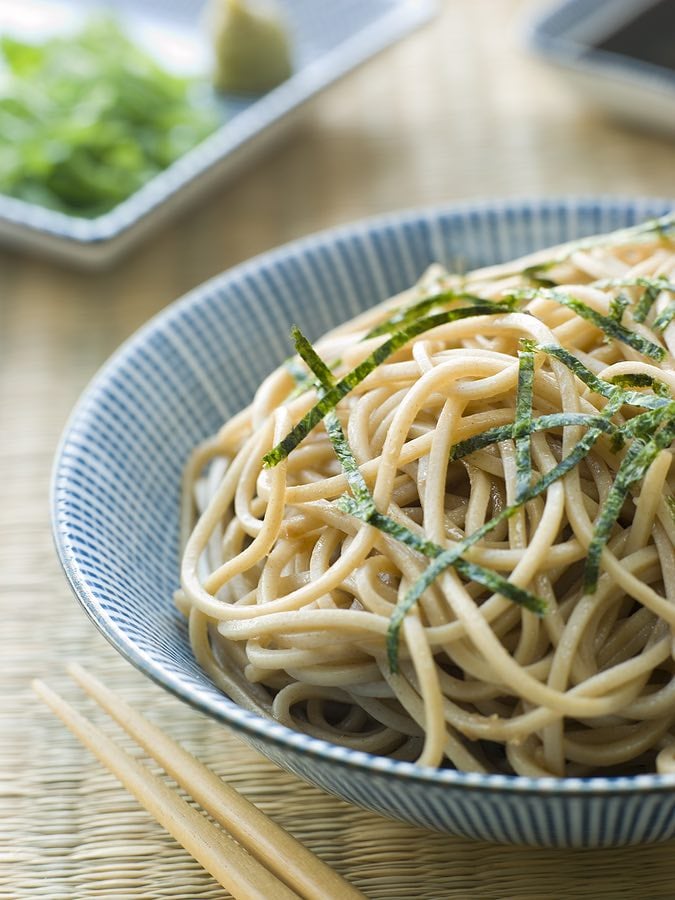
- Asian-style noodle dishes: Add zest to your Asian noodle dishes! Here’s one to try: Vegan Soba Noodles with Zucchini and Wasabi Peanuts. Another: Wasabi Soba Chilled with Grilled Veggies.
- Japanese seasonings: Add a pinch of wasabi powder to homemade Gomasio and Furikake, two popular Japanese seasonings.
See more of our Good Food Guides.
Photos: Bigstock
Leave a Reply