
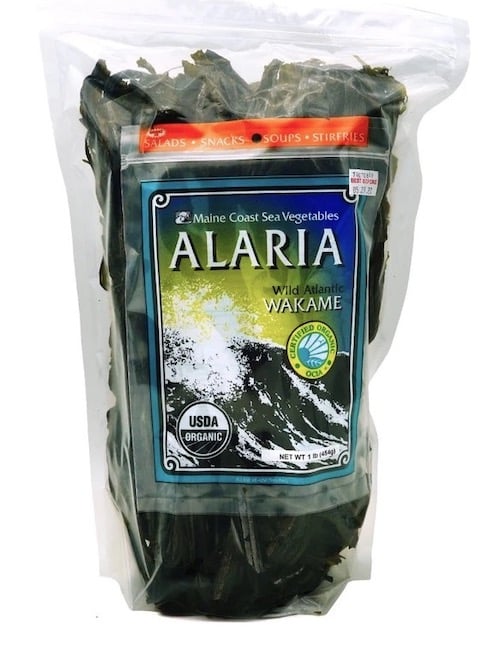
Closely related to Japanese wakame, alaria seaweed is its Atlantic counterpart. It grows wild near rocky, windy peninsulas of the northeast coast of North America. Here’s a concise guide to using the sea vegetable alaria (also called wild Atlantic wakame or winged kelp), with tips, ideas, and links to plant-based recipes.

What is alaria? Alaria comes in the form of a wavy frond with winglike leaves emanating from a thin, firm midrib. Like wakame, alaria has a mild flavor, but is more resilient and needs a longer cooking time. Unlike wakame, alaria has a pungent scent that not everyone will like.
Most of the alaria marketed domestically comes from the Maine coast, but it is also known on the other side of the Atlantic as a traditional sea vegetable of the British Isles. Look for it in natural foods stores or online.
Alaria Nutrition Notes
Alaria is a rich source of vitamins C, A, and B vitamins, including folacin, niacin, and B12. A 1-ounce serving provides 100 percent of the Recommended Daily Allowance of vitamin B12, a vitamin rarely occurring in vegetable sources.
It also provides a range of minerals, including magnesium and phosphorus, as well as many trace elements. Learn more about the nutrient profile of alaria.
Tips for Cooking with Alaria
The firm texture of alaria makes it most appropriate for use in recipes that require long simmering. To make it easier to chop, reconstitute it by soaking it in warm water for 10 to 15 minutes.
The volume of alaria doubles when soaked. Alternatively, you may simply snip it with kitchen shears without reconstituting and add it directly to soups. Either way, check carefully for bits of shell that may be hiding in the tangled fronds.
Easy Ways to Use Alaria
Marinate a small amount of reconstituted alaria overnight in a vinaigrette. Chop and add to grain salads, cucumber salads, or hot or cold-cooked Asian noodles such as somen or soba.
Simmer a small amount of chopped reconstituted alaria in tomato sauce, flavored with dried or fresh herbs, for at least 30 minutes. Serve over cooked Asian noodles.
Make alaria “chips” by snipping the dried fronds into small pieces with kitchen shears and frying in a hot skillet with a small amount of oil until crisp and lightly browned. Drain on paper towels and serve with soy sauce.
Add to soups: ½ cup or so of dried alaria, snipped into small pieces with kitchen shears, to long-simmering soups. Try it in bean or pea soups, grain soups (such as barley soup), or vegetable soups (such as minestrone).
Swap into recipes for wakame: Use alaria in recipes that call for wakame.
Plant-Based Recipes for Using Alaria
Fresh Salsa with Alaria: While an unexpected use for a sea vegetable at first glance, this alaria salsa inspires thoughts of coastal Mexican cuisine. Think ceviche minus the fish!
Miso Soup: Vegan Japanese-style traditional miso soup is one of the easiest and quickest bowlfuls you can make. Try swapping kombu for alaria.
Asian Seaweed Salad: A simple and delicious gingery side-salad with sesame and rice vinegar.
Curried Lentils: A comforting brothy green lentil soup with alaria, spinach, and burdock root.
Cucumber and Alaria Salad: Lime juice and ginger make this a bright and refreshing side dish that would pair perfectly with an Asian-inspired noodle dish.
More sea vegetable guides
- A Guide to Nori with Recipes that Aren’t Sushi
- A Guide to Kombu and Kelp
- A Guide to Wakame
- How to Use Arame Seaweed
- How to Use Dulse (Atlantic Seaweed)
See more of this site’s Good Food Guides.
Leave a Reply