
Sindi Tairi is a subtly sweet, spiced, and aromatic rice preparation from Sapna Punjabi’s beautiful book Dal Chawal: 85 Vegetarian Indian Recipes Combining the Power of Dal and Rice.
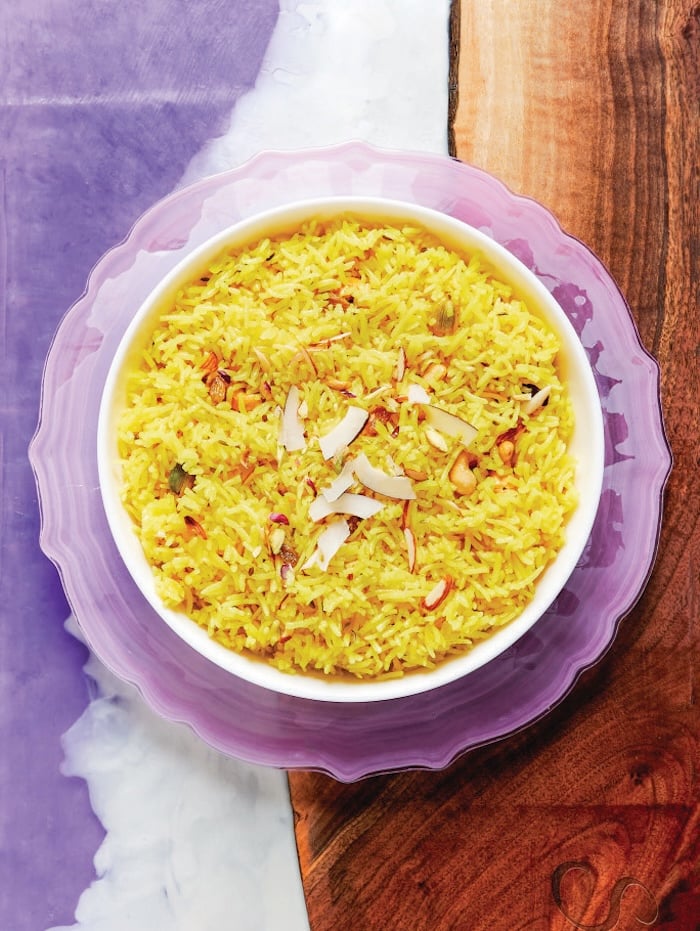
Sapna Punjabi writes: “Tairi is traditionally prepared during special Sindhi festivals such as Cheti Chand, which honors the birthday of Sindhi patron saint Jhulelal, an incarnation of the Hindu water god, Varun.
The Cheti Chand festival is celebrated when the crescent moon appears on the second day of the Chaitra month, marking the arrival of spring. Traditional Sindhi cuisine is influenced by Persian, Arab, and Central Asian cooking traditions, so this dish embraces a diversity of flavors: coconut is a holy fruit for Hindus, while saffron, pistachios, and almonds are plentiful in Persian and Muslim cuisines.
Similar dishes in other regional Indian cuisines include Kashmiri zarda and North Indian meethe chawal.”
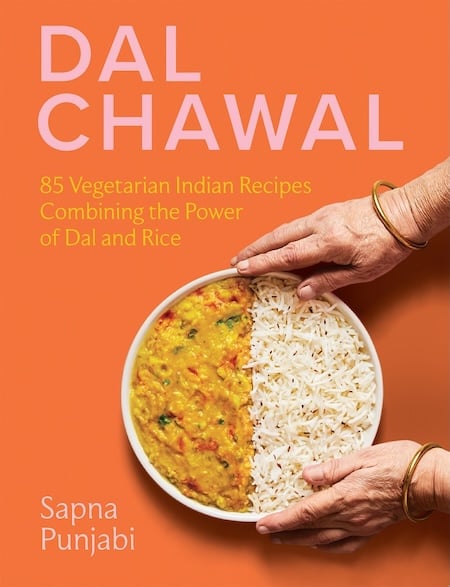
Dal Chawal is available on Bookshop.org* and wherever books are sold
Sindi Tairi is excerpted with permission from Dal Chawal: 85 Vegetarian Indian Recipes Combining the Power of Dal and Rice by Sapna Punjabi published by Hardie Grant North America, April 2025, Photo at top: Nitya Jain.
Also from Dal Chawal on this site: Loaded Masoor Dal (Red Lentil) Hummus
AYURVEDA NOTES
- VATA The warming spices and nuts, raisins, and coconut make this a wonderful dish to nourish vata.
- PITTA Substitute almonds and sunflower seeds for the cashews and pistachios.
- KAPHA In addition to cinnamon, cardamom, and turmeric, add a couple of pinches of black pepper to support kapha.
Explore more …
- Tehri-Inspired Brown Rice & Sweet Potato Pilaf
- Basmati Rice Pilaf with Fruits and Nuts
- Delicious rice recipes from around the world
Sindhi Tairi
Sindi Tairi is a subtly sweet, spiced, and aromatic rice preparation from Sapna Punjabi's beautiful book Dal Chawal.
Ingredients
- 1 cup (200 g) basmati rice
- 3 tablespoons (45 g) neutral oil of choice (such as sunflower or avocado)
- 2 tablespoons raw cashews
- 2 tablespoons sliced almonds
- 1 teaspoon fennel seeds
- ½-inch (1.3 cm) piece cinnamon stick
- 3 green cardamom pods
- 8 to 10 saffron strands soaked in 1 tablespoon warm water
- 2 tablespoons raisins
- ¼ teaspoon fine sea salt
- ⅛ teaspoon ground turmeric
- 2 cups (480 ml) water
- ¾ cup (170 g) cane sugar or turbinado sugar
- 2 tablespoons chopped pistachios
- 1 tablespoon unsweetened shredded coconut or coconut flakes
Instructions
- Rinse the rice in a fine-mesh sieve under cold running water until the water runs clear, about a minute. Transfer to a medium bowl, add water to cover by 2 inches (5 cm), and soak for 20 to 30 minutes. Drain and set aside.
- In a 3-quart (3 L) heavy-bottomed pot, heat the oil over medium heat. Add the cashews and sliced almonds and cook over low heat until lightly browned, 2 to 3 minutes. Remove with a slotted spoon and set aside.
- In the same pot, fry the fennel seeds and cinnamon stick over low heat for 15 to 30 seconds. Smash the cardamom pods with a mortar and pestle to release the seeds from the pods. Add the cardamom seeds and the outer skin to the pot and fry with other spices. Add the soaked rice and gently sauté the rice in the oil for a minute.
- Add the soaked saffron strands along with their soaking liquid, the raisins, salt, turmeric, and water. Cover and cook over medium heat for 10 minutes.
- Uncover the pot (the rice should be cooked halfway through), stir in the sugar, reduce the heat to low, and cook uncovered until the rice is tender and all of the liquid is absorbed, 5 to 10 minutes. Check for doneness by pressing a grain of rice between your fingers. The rice should be soft but still firm in shape.
- Fluff the rice with a fork. Garnish with the pistachios and coconut. Remove from the heat, cover the pot, and set aside undisturbed for 10 to 15 minutes before serving.

Explore lots more plant-forward salads & sides.
* This is a Bookshop.org affiliate link. If a product is purchased after linking through, The Vegan Atlas receives a modest commission, which helps us to keep growing.
Leave a Reply